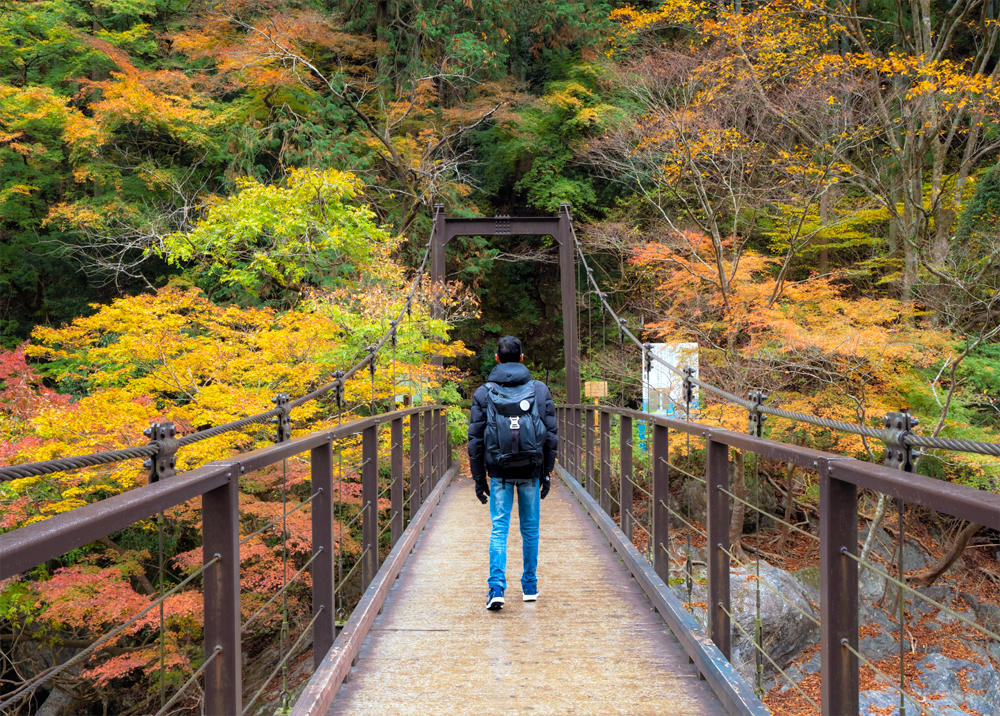
Japan’s vibrant autumn foliage is almost as iconic as its springtime sakura. The Tokyo metropolis has no shortage of city parks and landscape gardens for locals and visitors to enjoy the beauty of autumn. But experiencing Japan’s autumn in a natural environment is an entirely different experience which you should not miss out on.
Fortunately, the breathtaking natural scenery of the Ome region is easily accessible from central Tokyo — just 1.5 hours away by train. Home to the city of Ome, this semi-rural area is a popular autumn destination for Tokyo residents, but is still largely unknown to foreign tourists. Even so, the area gets enough traffic that tourist facilities such as hiking trails, restaurants, visitor information centres and accommodation have been developed. Whether you’re seeking to leisurely bask in the beauty of autumn or looking for your next hiking adventure, you’ll find that a trip to the Ome region will be very much worth your time. You can even explore a canyon or go rafting in the Tama River!
While a day trip from Tokyo will allow you to enjoy many of the wondrous sights of the Ome region, we’d recommend you spend the night somewhere close to the region (like we did) to give yourself more time to explore. Even then, we feel that we’ve barely scratched the surface of what the Ome region has to offer.
When to Visit the Ome Region
The peak autumn viewing period in this region is about one week earlier (mid-November) than in central Tokyo (late November). However, when we visited in late November 2019, there was still plenty of autumn foliage to admire. The dense carpets of autumn leaves also held their own beauty.
Getting to the Ome Region
It’s a fairly straightforward journey from Tokyo, starting from a station on the Chuo Line. For example, from Shinjuku Station, take a train along the Chuo line towards Takao, then alight at Tachikawa Station. Transfer to the JR Ome Line.
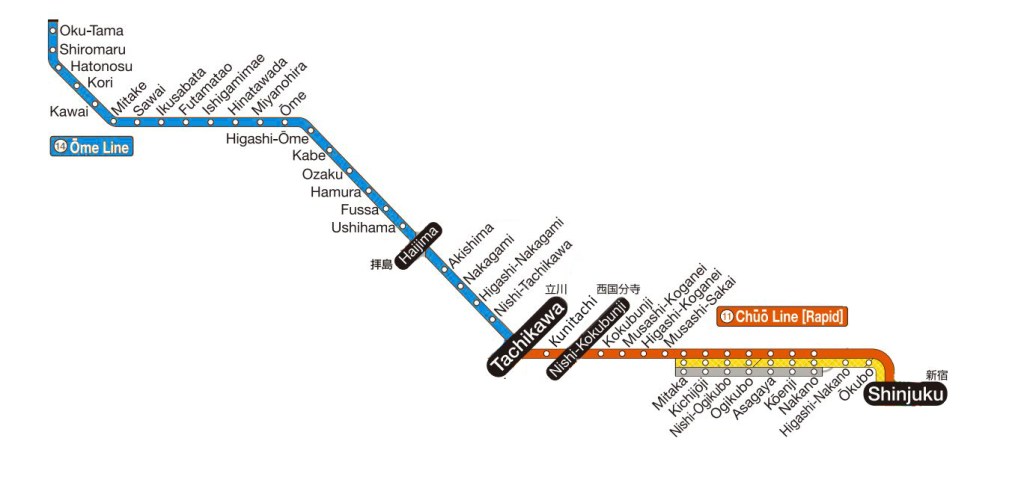
Getting Around the Ome Region
Many of the attractions of the region can are easily accessible by foot from the stations between Ome Station and Oku-Tama Station (see below). This stretch has even been nicknamed the “Tokyo Adventure Line”!
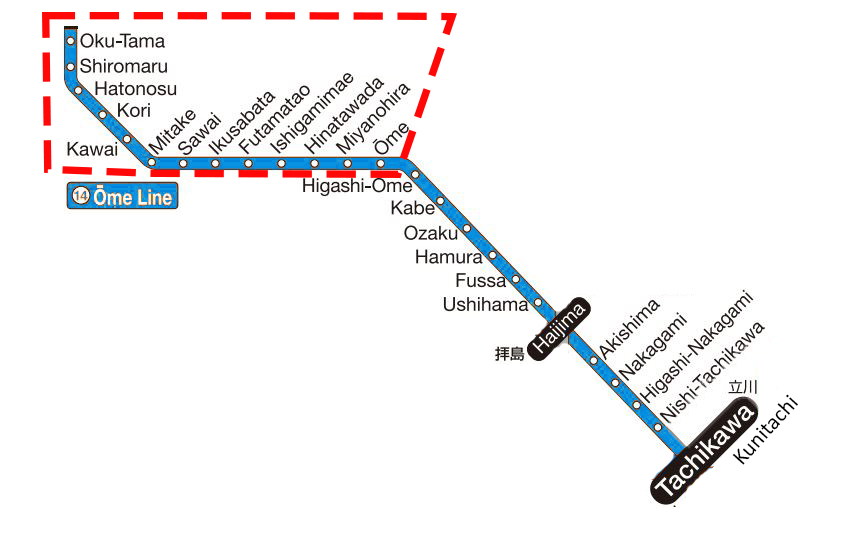
You can choose to use the Ome Line to travel between places of interest, or walk the scenic hiking trails along the Tama River. The Ome City Tourism Association website has some suggested itineraries and routes (Japanese-only, but still usable with Google Translate).
Do note that trains on the Tokyo Adventure Line are less frequent than in central Tokyo (close to an hour between trains). Use a transit planner such as Jorudan to plan your journey if you’re short of time.
Where to Stay
The Ome City Tourism Association website has a list of accommodation options, including traditional inns and guesthouses. However, it may be difficult to get a booking for the autumn season, when there is a surge of visitors. It will probably be easier to find accommodation near stations between Tachikawa Station and Higashi-Ome Station. We managed to get a room in Comfesta Inn Kabe, a low-cost hotel just a few minutes away from Kabe Station. It was pretty basic, but it had all we need for a night’s stay (including a communal microwave oven to heat up the Halal bentos we had brought).
Tip for Muslim travellers: There are no Halal restaurants in the area, as far as we can tell, so we’d recommend packing food for the journey. If you’re staying the night in Kabe, there is a 7-Eleven and an Aeon Supermarket just outside Kabe Station where you can try to find vegetarian or seafood options.
Our Experience
Note: When we visited in late November 2019, the region was still recovering from a recent typhoon. The authorities and residents had done an incredible job of making the area safe again, but parts of the hiking trail along the Tama River were still closed due to damage. The region should have recovered almost fully by now and the hiking trail appears to be fully open again.
Hatonosu Gorge
The highlight of Hatonosu Gorge is a suspension bridge across it, which offers incredible views of the Tama River below. The bridge itself is also photogenic due to the surrounding foliage.
You can get to Hatonosu Gorge from Hatonosu Station. Just outside the station there is a trail that leads down to the bridge (about 10 minutes’ walk).
Mitake Gorge
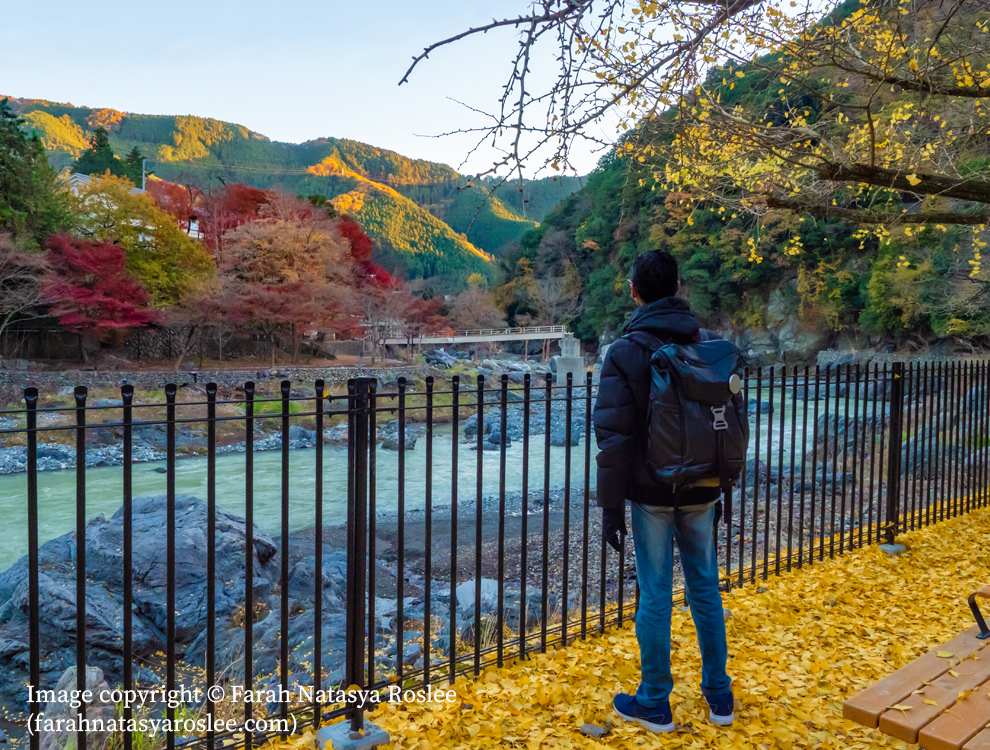
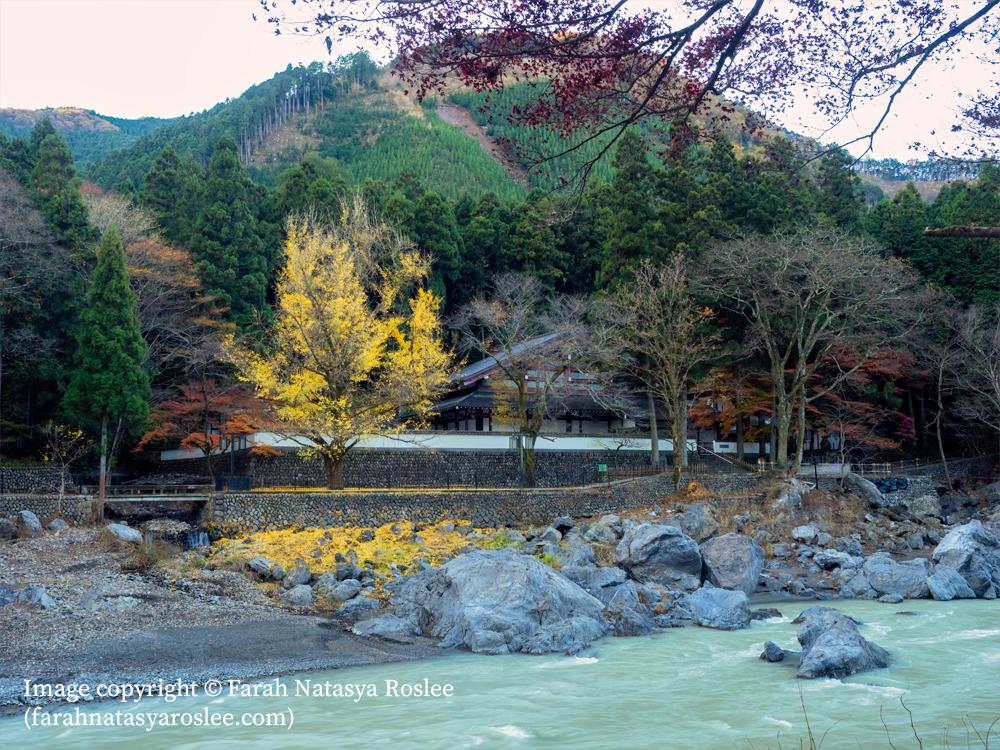
One of the highlights of the region is Mitake Gorge, through which the Tama River runs. The banks of the river are adorned by vibrant Japanese maple trees (momiji) and golden gingko trees, creating a breathtaking autumn scene. Mitake Gorge is easily accessible; there a walkway leading down to the gorge just a few minutes’ walk from Mitake Station.
We set off from our hotel in Kabe before sunrise to so we could take photos in Mitake Gorge before the light got too harsh. We ended up spending most of our time in this area. Even though it was past the peak autumn viewing season, there was still so much natural beauty to be seen.
Mt. Mitake (Mitakesan)
Mt. Mitake is another haven of natural beauty, with large swathes of untouched forests and waterfalls. It’s also the location of the popular Musashi-Mitake shrine. There is a small village close to the shrine with shops and Japanese-style inns for pilgrims as well as regular visitors.
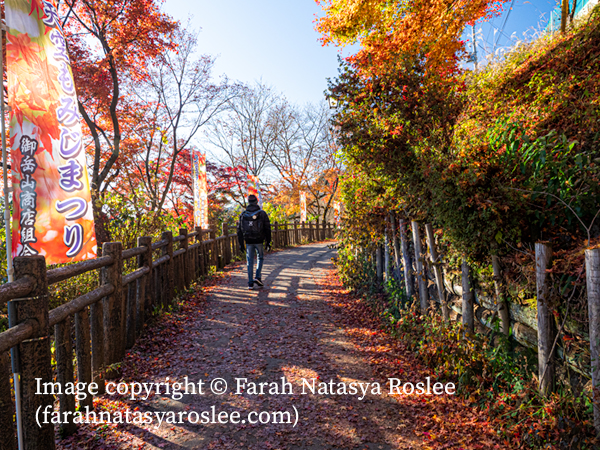
We couldn’t spent much time there, but we enjoyed the view and managed to take a short walk around the area. A couple of locals coming down the mountain called out “Good morning,” in Japanese as they passed us; it seemed like a warm, welcoming place.
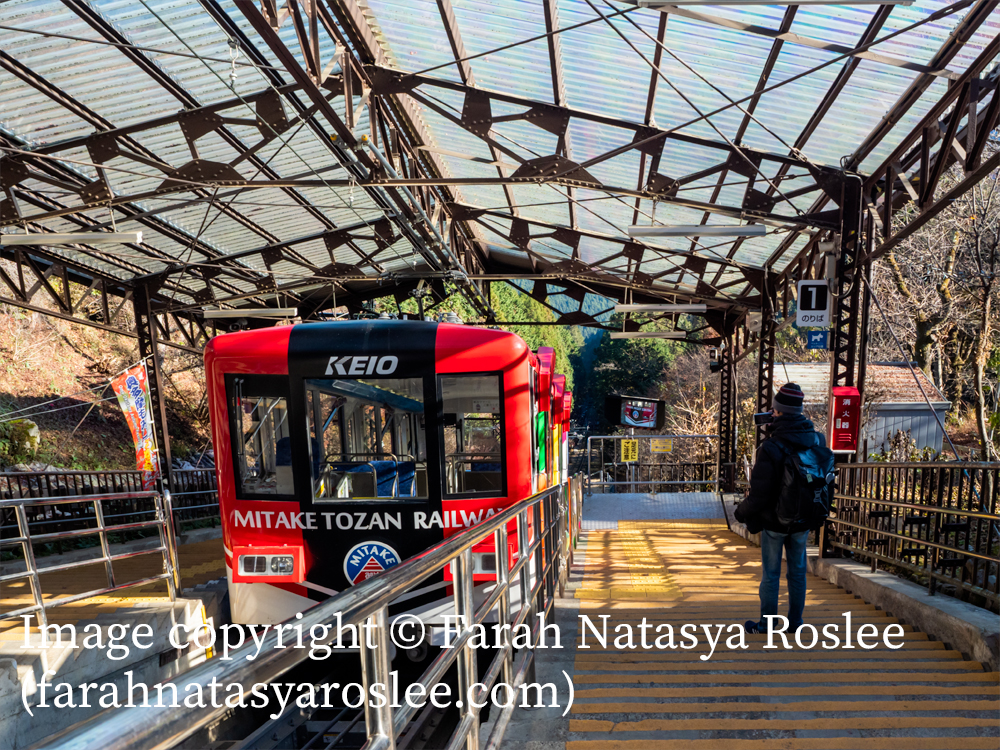
You can get to Mt. Mitake from Mitake Station via the Mitake Tozan Railway cable car (see timetable and fares). Take the Nishi Tokyo Bus (see timetable) from outside Mitake Station to the terminal to Takimoto Station (the terminal stop), then walk uphill for about 5-10 minutes to the start of the Mitake Tozan railway. The cable car will take you up the mountain. Do take note of the cable car and bus timetables to plan your journey back down the mountain.
This is just a sample of what you can find in the Ome Region; there’s still so much more to see and do in the area. We hope we’ve convinced that a day trip from Tokyo to the Ome Region should be an essential part of your Japan autumn itinerary!
 Farah Natasya Roslee